Modular storage is built on flexibility: shelves, brackets, drawers and rails that can be combined and rearranged. That flexibility is also what makes it hard to choose without help. Real-time 3D configurators and spatial planning let customers design a solution that fits their space. This article looks at how, with Elfa and WFI’s Yelper as examples.
Modular storage in 3D
- Product configurator: build the system part by part, with the parts list updated automatically.
- Spatial planning: place the solution in a room with real dimensions.
- AR: see the configured design in your own space, without an app.
- Beyond the home: logistics shelving and other storage systems.
Why modular storage and 3D go together
A customer might need to fit a closet into a particular corner or plan shelving for a specific set of items. Traditionally that meant visualizing it alone, or relying on a salesperson. In a configurator the customer assembles the system from the available components and sees it take shape, with dimensions that match the space.
The product configurator
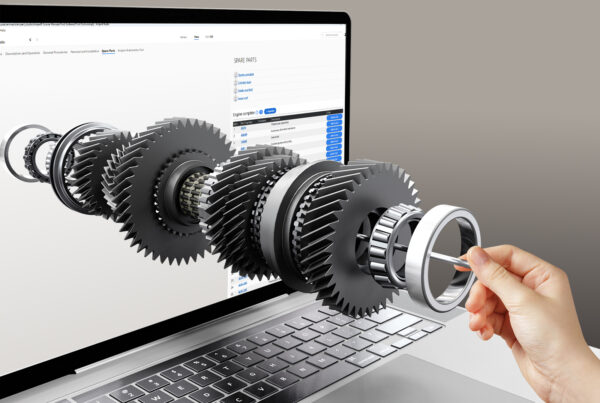
Every part is shown in 3D as it is added, and the bill of materials updates in real time, so no component is forgotten, from large shelves down to small screws. Drag and drop makes it easy for first-time users, and live price updates make the cost clear while designing. See the shelving and storage configurator.
Aniplanner: planning the whole room
Aniplanner is Animech’s spatial configurator. The user enters the room’s dimensions and plans storage and layouts in context: where a wardrobe goes, how it relates to walls and doors, and how it works with other furniture. That helps with awkward spaces such as small closets, sloping ceilings or alcoves, and it lets people try ideas such as shelving around a doorway or a wardrobe as a room divider.
AR in the home
With AR, customers see their configured design in their own space. Animech’s AR conversion needs no app download or plug-in.
Example: Elfa
Elfa’s storage system has a very large range of parts, which is useful but can be overwhelming without a tool. The configurator built by Animech lets users start from a base design and add components, each shown in 3D, with the bill of materials accounting for every part. Read the Elfa case.
Example: Yelper by WFI
In logistics, shelving has to use space well and adapt as storage needs change. WFI’s Yelper configurator lets logistics managers design shelving layouts for specific requirements, using drag and drop and real-time visualization.
Beyond storage
The same approach works wherever products are modular and have to fit a space: kitchens, office furniture and home offices. See 3D configurators in the furniture industry and how to buy.
Frequently asked questions
Why do modular storage systems suit configurators?
Customers combine many modules, sizes and accessories, and the result has to fit their space. A configurator shows the result and keeps the parts list correct.
What is Aniplanner?
A spatial configurator where users enter room dimensions and plan storage and layouts in the whole room, not only the product.
Can it be used outside the home?
Yes. WFI’s Yelper configurator lets logistics managers design shelving layouts for specific storage needs.
About the author. Staffan Hagberg is CMO and Head of Sales at Animech. He has sold real-time 3D and configurator solutions to industrial and consumer brands for about 14 years. About Animech.