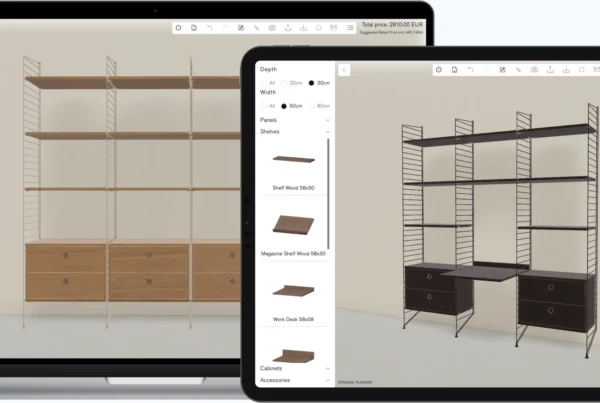
A virtual showroom, also called a digital showroom, lets a brand present collections or a whole product range online, in 3D, to buyers who explore at their own pace. It extends the reach of a physical showroom or trade fair and makes it easier for buyers to compare, ask questions and order. This article explains what it is and how brands use it.
Virtual showrooms in short
- What: an online 3D space for showing and selling ranges.
- Who: brands and manufacturers selling to retailers and dealers.
- Why: reach more buyers, with easier scheduling and less travel and sampling.
- Extra: AR to place products in the buyer’s own space.
How brands use them
Instead of scheduling many physical meetings, a brand adds its collections to the showroom and lets retailers visit when it suits them. Buyers can view the whole range and place orders in the same platform. Many buyers can visit at once, which a physical showroom cannot offer. According to McKinsey’s 2021 B2B research, around 70 to 80 percent of B2B decision makers prefer remote human interaction or digital self-service.
What a brand can do
- Organize collections and arrange products by buyer, history or location.
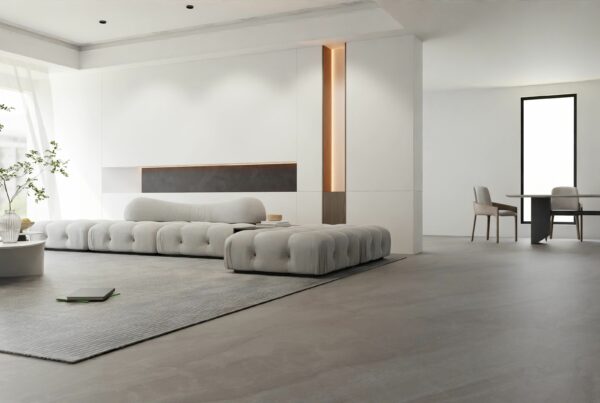
- Create customized 3D environments and plan the space.
- Add hotspots and animations with product information.
- Manage content without involving developers.
- Collect and analyze data on what buyers look at.
What buyers can do
- Move around the space and look at products in 3D.
- Check dimensions and details.
- Read descriptions and specifications.
- Place orders.
AR in showrooms
With AR, buyers can place products in their own space. Product teams can also use shared 3D views to review designs and variants across countries, which can reduce shipping prototypes back and forth.
Animech’s 3D showroom
Animech builds browser-based 3D showrooms for whole product ranges. Read about the 3D showroom.
Frequently asked questions
What is a virtual showroom?
An online space where brands show collections or product ranges in 3D and buyers explore them and place orders, replacing or complementing physical showrooms and trade fairs.
Who uses virtual showrooms?
Brands and manufacturers selling to retailers and dealers, in fashion, beauty, home goods, industry and more.
Does a showroom need AR?
No. AR is an addition that lets buyers see products in their own space.
About the author. Staffan Hagberg is CMO and Head of Sales at Animech. He has sold real-time 3D and configurator solutions to industrial and consumer brands for about 14 years. About Animech.