3D marketing uses 3D models to produce images, film and interactive content. Because the model is the source, one piece of work can feed many channels. This article explains what 3D marketing and 3D advertising mean, where they pay off and where they do not.
3D marketing in short
- One model, many outputs: images, film, interactive views and AR.
- Fast changes: edit the model instead of reshooting.
- Good for: products with many variants, products not yet built, products that need explaining.
- Less suited to: a single product with one finish that exists and is easy to photograph.
Marketing and advertising
Marketing is about understanding customers and meeting their needs. Advertising promotes a business through paid channels. 3D serves both: visuals that let people explore a product, and campaign material produced from the same model.
Where 3D pays off
- Variants. One model gives every colour, size and combination without a photo shoot for each.
- Speed. Changes are made in the model in minutes instead of waiting for a new prototype or a reshoot.
- Control over detail. Surfaces, light and small details can be adjusted precisely.
- Independence from production. Marketing does not have to wait for physical prototypes.
- Reuse. The same model works in web, print, film, sales material and the aftermarket.
- Experience. 3D can create mood and atmosphere, and show how a product fits into a customer’s life, not just what it looks like.
Example: Fjällräven
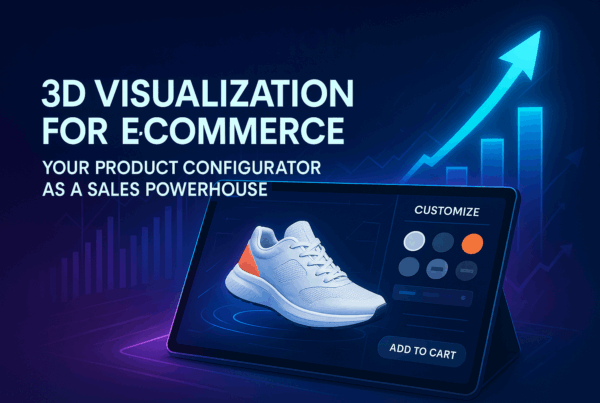
Together with Fjällräven we built a configurator that customers reach from the brand’s own website on phone, tablet or computer, with the result shown in real-time 3D. It is an example of 3D marketing that is also a sales tool.
Where it does not pay off
3D asks for an investment in good models. If you have one product with few variants, that already exists and is easy to photograph, photography may be the simpler choice. The more variants, the more reuse and the more interactivity you need, the stronger the case for 3D.
Read more: what is 3D rendering · what is 3D visualization · visual commerce
Frequently asked questions
What is 3D marketing?
Using 3D models to produce images, film and interactive content for marketing, so that one model serves many channels.
How is 3D different from photography?
A 3D model can produce every variant and view without a new shoot, and edits are made in the model. Photography fits when a product exists and has few variants.
Does it replace photography?
Not always. Choose by product: many variants, products not yet built or interactive needs favour 3D.
About the author. Staffan Hagberg is CMO and Head of Sales at Animech. He has sold real-time 3D and configurator solutions to industrial and consumer brands for about 14 years. About Animech.
Put 3D marketing to work on your own products
Animech builds 3D configurators and visual tools that turn product visuals into leads and sales. See Aniconfigurator, or book a demo and we will show you what it can look like for your range.